
Phononic TECs: Cooling High-Speed Data Center Transceivers
Phononic’s application-specific approach to TEC design, along with the hundreds of reference designs we’ve developed over the past decade, presents the ideal solution for cooling lasers used in high-speed optical components. Phononic offers cost-effective solutions for multichannel laser packages through powerful TECs that deliver best-in-class power consumption to achieve high yield and low cost. With tens of millions of TECs shipped worldwide, Phononic combines U.S.-based engineering and design expertise with high-volume manufacturing in Thailand, delivering the scale and innovation that have made us the industry’s trusted supplier for next-generation optical communication solutions.
With deployments across every major hyperscaler and the industry’s first qualified and deployed 1.6T HVM solution, Phononic’s unmatched portfolio offers capabilities with no true peer in the market.
Phononic TECs are custom-engineered to scale optical performance with precision and reliability—optimized for AI performance.

Phononic TECs: Superior Cooling for Pluggable Transceivers
Products
TECs for Box TOSA
Phononic’s high-performance TEC solutions for box TOSA [transmit optical subassembly] laser packages deliver industry-leading cooling for applications of 100G, 400G, 800G and even 1.6T and beyond.
These TECs are perfectly suited for reach requirements of co-located and regional data centers and hyperscalers, and are well suited for QSFP transceiver packages as well. Phononic’s TEC series is expertly designed to meet the needs of your box TOSA laser package, optimizing design to meet or exceed critical speed, distance and form factor/space requirements.
TECs for TO CAN
Phononic’s high-performance TECs efficiently cool TO can lasers, setting the standard for high heat pumping density while simultaneously reducing overall TOSA power consumption.
Specifically designed for optimized performance given your specific end-application, this series can be used to cool a variety of TO can sizes, including TO60, TO56, and even as small as TO40. These TECs are incredibly high value, delivering industry-leading performance, cost-effectively, in a variety of bandwidths from 1G to 100G and beyond. This suite of TECs is appropriate for use in passive optical networks, wireless networks and FTTX applications, and are ideal for use in any package or TOSA form factor where space is at a premium.
The Phononic Difference

Robust, High Volume Capable Supply Chain
US-based engineering and design expertise paired with high volume Thailand-based manufacturing enable Phononic to deliver industry-leading NPI timetables and opportunity for dedicated NPI lines to meet your customer demand for best-in-class TECs. Phononic’s proprietary TEC modeling process accurately predicts product performance during initial testing, resulting in fewer design iterations and faster end product acceptance, enabling a swift transition to high volume manufacturing to support your customers’ demand and production schedule.

World class custom designs for your optical components.
At Phononic, we design and manufacture our TECs. Our team of application engineers collaborate with your team to extract the maximum potential from our TECs. Our proprietary TEC modeling process ensures you get accurate samples, quickly.
With application-specific TECs by Phononic, you’ll see a lower cost per lane and a significant drop in power consumption, boosting your ROI while consistently meeting your customers’ needs.

Superior Quality & Reliability
Our robust QMS & EMS certifications towards ISO 9001:2015 & 14001:2015 coupled with our rigorous reliability testing, ensure highest quality and in-field reliability for our 40M+ devices in the field.
Applications

Phononic TECs enable High-Speed Optical Receivers for AI & Machine Learning – 800G, 1.6T & beyond.
Phononic’s TECs provide an efficient and reliable cooling solution for high-speed optical transceivers in data centers. By managing the heat generated by these components, TECs help maintain optimal performance, extend the lifespan of the transceivers, and support the overall efficiency of data center operations.

Cooled optics enable hyperscale data centers to connect to the optical edge.
High-speed optical transceivers are integral to the functioning of telecommunication data centers, enabling the efficient and high-capacity transmission of data across global networks. They facilitate data transfer to the optical edge, connect with hyperscale data centers, and support the scalability and reliability of the telecom infrastructure. As data demands and network complexities continue to grow, the need to cool high-speed optical transceivers will become even more critical to ensure the smooth operation of telecommunications services.
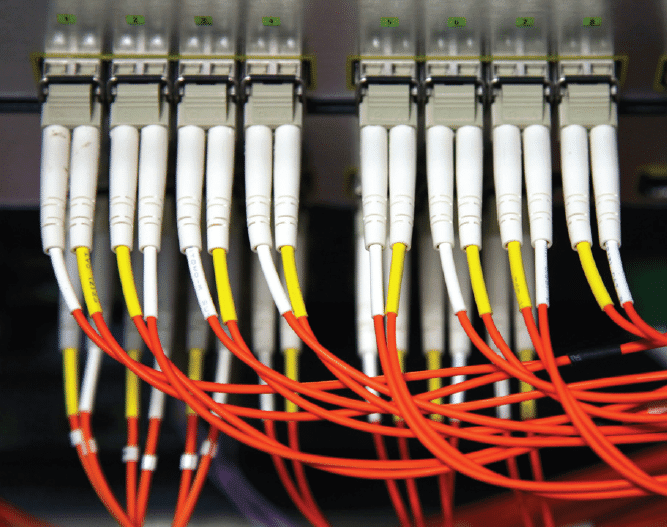
Phononic TECs enable High-Speed Optical Receivers for AI & Machine Learning – 800G, 1.6T & beyond.
High-speed optical transceivers facilitate efficient data transfer between edge and central data centers. This connectivity is essential for synchronizing data, performing large-scale analytics, and maintaining a cohesive network infrastructure. As data rates continue to increase, cooled optical transceivers are a must have in order to support the efficient handling of data-intensive and latency-sensitive applications, enabling real-time processing and decision-making for applications such as IoT, gaming, autonomous vehicles and augmented reality.
Phononic TECs are Enabling the AI Revolution
Cooling is imperative for Fiber Optical Communications
As the data rate demand continues to increase, so too does the need for extremely high performance. And while there was a time when lasers in transceivers would work within acceptable standards for short distances, that time is quickly passing. There is a clear need for an extended range, which requires higher power and thereby generates heat and more data per clock event (in which compressed data requires very accurate wavelength control in both DWDM and coherent modulation), which is highly affected by heat. This is where inexpensive, efficient thermoelectric coolers, or TECs, come into play.
AI creates a new Surge in Demand
for High Speed Transceivers.
Phononic TECs are the Ideal Solution to for High Performance & Efficiency
Contact Us to Unthrottle Your Data Center Performance
Looking for more?
Readily-Deployable Thermal Systems™
Phononic’s proven high‑performance thermoelectric coolers (TECs), combined with integrated mechanical and thermal architecture and API‑accessible control firmware and software, provide precise, performance‑enhancing, node‑level cooling when deployed in our Thermal Control Systems™. Thermal Control Systems™ integrate with existing liquid or air cooling systems, and enable rapid, chip-level hotspot thermal control from transceivers to co-packaged optics to HBM GPUs and more.
Intelligent Thermal Fabric™
Underpinned by Phononic’s Thermal Control Systems™ deployed across the data center, Phononic’s Thermal Fabric™ is a software-defined, TEC-enabled control layer that is converting thermal management into a real-time, system-level optimization across the entire AI data center. Enabling millisecond control of cooling, real-time thermal telemetry and analytics, workload-aware orchestration and seamless software integration, our solutions are cooling the data centers that are enabling AI.
Thermoelectric Cooling Experts
Thermoelectrics have existed for over a century—but Phononic has redefined them. By integrating heat pumping, transport, and control, we created an efficient, scalable, and sustainable thermoelectric system. Our TECs deliver 60% higher heat pumping density and up to 30% lower power use as compared to industry standards, and are backed by Phononic’s consultative, application‑specific engineering approach so we consistently deliver the right configuration for your specific application.